
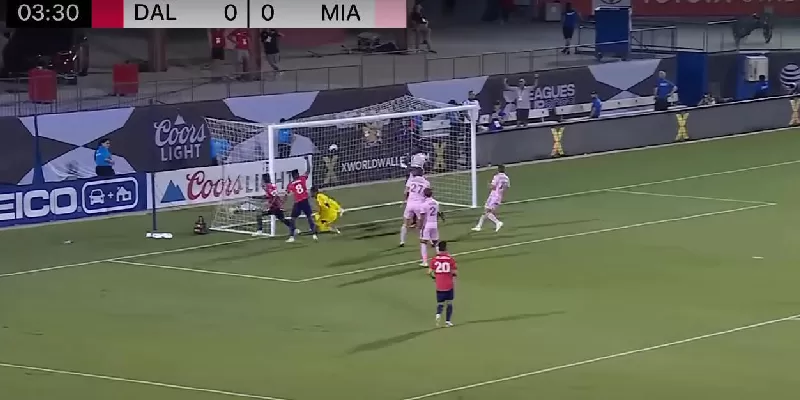
Unlike many countries where soccer follows a simple promotion and relegation pyramid, the United States has developed a unique league system made up of professional, collegiate, semi-professional, and amateur competitions.
Whether you're a player hoping to advance your career, a referee looking for officiating opportunities, or simply a fan trying to understand how American soccer works, navigating the various leagues can be confusing.
This guide explains every major men's soccer league in the United States, how they fit together, and how players and referees progress through the American soccer system.
There isn't one single men's soccer league in the United States. Instead, there are multiple levels of competition, including:
- Major League Soccer (MLS)
- USL Championship
- USL League One
- MLS NEXT Pro
- NCAA College Soccer
- USL League Two
- NPSL
- UPSL
- Hundreds of regional and state amateur leagues
Together, these leagues create one of the largest soccer ecosystems in the world.
Table of Contents
- The U.S. Soccer Pyramid
- Professional Soccer
- Major League Soccer
- USL Championship
- USL League One
- MLS NEXT Pro
- NCAA Soccer
- USL League Two
- NPSL
- UPSL
- Regional Adult Leagues
- Referee Career Path
- Frequently Asked Questions
Understanding the U.S. Soccer Pyramid
One of the biggest differences between American soccer and European football is that the United States does not currently use a traditional promotion and relegation system.
Instead, professional leagues are sanctioned by the United States Soccer Federation (USSF) according to their division level. Clubs generally remain in the same league regardless of whether they finish first or last.
However, this doesn't mean there is no player development pathway. Players and referees still progress through increasingly competitive levels, moving from local leagues to collegiate competitions, professional development leagues, and eventually the highest professional divisions.
Unlike England or Germany, finishing first in the USL Championship does not automatically promote a club to MLS. Each professional league operates independently under its own ownership and licensing structure.
Professional Men's Soccer Leagues
The United States currently has three officially sanctioned professional divisions, along with MLS NEXT Pro, which serves as an important bridge between youth development and top-level professional soccer.
| League | Level | Status | Main Purpose |
|---|---|---|---|
| MLS | Division I | Professional | Highest level of U.S. soccer |
| USL Championship | Division II | Professional | Second-tier professional league |
| USL League One | Division III | Professional | Professional development |
| MLS NEXT Pro | Development | Professional | Reserve & young player pathway |
Major League Soccer (MLS)
Major League Soccer (MLS) represents the highest level of men's professional soccer in both the United States and Canada. Since its inaugural season in 1996, MLS has experienced remarkable growth in club expansion, stadium development, television audiences, and international recognition.
The league currently consists of 30 clubs, making it one of the largest top-flight professional soccer leagues in the world.
Key Facts
- Division I professional league
- Founded in 1996
- 30 clubs (2026 season)
- Operates under a single-entity business structure
- Includes clubs from both the United States and Canada
MLS clubs participate in domestic competitions such as the U.S. Open Cup while also competing internationally in tournaments including the CONCACAF Champions Cup and Leagues Cup.
The league's popularity has grown significantly ahead of the 2026 FIFA World Cup, helping soccer become one of the fastest-growing sports in North America.
USL Championship
The USL Championship is sanctioned as Division II and serves as the second-highest professional league in the United States.
Although positioned below MLS, many clubs operate modern stadiums, attract thousands of supporters, and maintain highly competitive professional environments.
For many players, coaches, and referees, the USL Championship serves as the final stepping stone before reaching Major League Soccer.
Why It Matters
- Fully professional competition
- Strong local fan bases
- Excellent environment for referee development
- Regular participation in the U.S. Open Cup
USL League One
USL League One was established to expand professional soccer into smaller American markets while creating additional development opportunities.
The league plays a vital role in helping young players transition from amateur or collegiate soccer into the professional game.
It has also become an important league for referees working toward national assignments.
MLS NEXT Pro
Launched in 2022, MLS NEXT Pro bridges the gap between youth academies and first-team professional soccer.
Most MLS organizations now operate reserve teams in this league, allowing promising players to gain professional experience before making the jump to MLS.
For referees, MLS NEXT Pro provides fast-paced matches that closely resemble the demands of top-level professional soccer, making it an excellent platform for career development.
In Part 2, we'll explore NCAA college soccer, USL League Two, NPSL, UPSL, and the hundreds of amateur leagues that make up the foundation of American men's soccer.
College Soccer (NCAA)
Unlike many countries where young players join professional club academies at an early age, the United States has a unique player development system that combines education with high-level athletic competition. College soccer has long been one of the most important pathways to the professional game, producing thousands of players, coaches, and referees every year.
Although NCAA soccer is not a professional league, it plays a significant role in the American soccer ecosystem. Many current MLS, USL Championship, and MLS NEXT Pro players developed their skills while competing for college programs.
NCAA men's soccer is a collegiate competition rather than a professional league. However, it remains one of the most important stepping stones for players and referees pursuing careers in professional soccer.
NCAA Division I
Division I represents the highest level of college soccer in the United States. Universities at this level typically offer the strongest competition, the best facilities, and significant exposure to professional scouts.
- Highest standard of NCAA competition
- Large athletic budgets
- Professional-level coaching staffs
- Many MLS SuperDraft prospects
- Frequent attendance from professional scouts
NCAA Division II
Division II provides a high level of competition while placing greater emphasis on balancing academics and athletics. Many talented players choose Division II programs because they offer competitive soccer along with scholarship opportunities.
NCAA Division III
Division III focuses primarily on the student-athlete experience. Schools do not award athletic scholarships, but the level of competition remains surprisingly strong, with many former academy players continuing their soccer careers while earning a degree.
| Division | Competition Level | Athletic Scholarships | Professional Pathway |
|---|---|---|---|
| Division I | ★★★★★ | Available | Excellent |
| Division II | ★★★★☆ | Available | Good |
| Division III | ★★★☆☆ | No Athletic Scholarships | Moderate |
Many MLS referees and assistant referees have officiated NCAA matches during their careers. College soccer provides valuable experience because of its fast pace, competitive atmosphere, and high technical standards.
USL League Two
USL League Two is widely regarded as one of the premier pre-professional soccer leagues in North America. Most players are current NCAA athletes who compete during their summer break while maintaining their college eligibility.
This league allows players to continue developing without losing their amateur status, making it one of the most important talent pipelines for professional soccer.
Why USL League Two Matters
- Top summer league for college players
- Maintains NCAA eligibility
- Professional coaching environment
- Regularly produces MLS and USL professionals
- Excellent officiating opportunities for developing referees
Many future MLS players spend one or more summers in USL League Two before signing their first professional contracts.
National Premier Soccer League (NPSL)
The National Premier Soccer League (NPSL) is one of the largest amateur men's soccer leagues in the United States. Founded in 2003, it features clubs from across the country competing in regional conferences before advancing to national playoffs.
Unlike professional leagues, NPSL clubs vary considerably in size and resources. Some operate with modest local budgets, while others attract large crowds and have ambitions of moving into higher levels of competition.
Key Characteristics
- Nationwide amateur competition
- Regional conference format
- Strong community-based clubs
- Many former professional players
- Pathway for players returning from college or overseas
United Premier Soccer League (UPSL)
The United Premier Soccer League (UPSL) has experienced rapid growth over the past decade and is now one of the largest amateur soccer organizations in the United States.
Unlike some national leagues, UPSL emphasizes regional competition, helping clubs reduce travel costs while maintaining a long competitive season.
Today, hundreds of clubs participate across multiple conferences throughout the country, making UPSL one of the most accessible competitive leagues for adult players.
Why UPSL Continues to Grow
- Large number of participating clubs
- Regional scheduling reduces travel expenses
- Accessible for new clubs
- Competitive environment for aspiring professionals
- Growing opportunities for referees
Because UPSL operates in nearly every region of the United States, it has become an important development platform not only for players but also for referees seeking more competitive adult matches before advancing to higher-level assignments.
Regional Adult and Local Amateur Leagues
Beyond the nationally recognized leagues, hundreds of local and state associations organize adult men's competitions throughout the United States. These leagues vary greatly in skill level, ranging from recreational weekend soccer to highly competitive regional championships.
Many players continue competing in these leagues long after finishing college, while others use them as stepping stones toward semi-professional opportunities.
For referees, local adult leagues often provide the first opportunity to officiate experienced players, manage challenging match situations, and develop confidence before progressing to higher-level competitions.
Comparing America's Major Men's Soccer Leagues
| League | Level | Professional | Primary Players |
|---|---|---|---|
| MLS | Division I | Yes | Elite professionals |
| USL Championship | Division II | Yes | Professional players |
| USL League One | Division III | Yes | Young professionals |
| MLS NEXT Pro | Development | Yes | Reserve & academy graduates |
| NCAA Division I | College | No | Student-athletes |
| USL League Two | Pre-professional | No | College players |
| NPSL | Amateur | No | Adult amateur players |
| UPSL | Amateur | No | Adult & aspiring professionals |
Unlike many countries, these leagues are not connected through automatic promotion and relegation. Instead, each league operates independently, while players, coaches, and referees progress through performance, scouting, certification, and professional opportunities.
What's Next?
Now that we've explored the professional, collegiate, and amateur leagues, the next section will examine how players progress through the American soccer system, how the U.S. Open Cup connects clubs from different levels, and how referees can build a career from local matches all the way to Major League Soccer.
Youth Development in American Soccer
Every professional player starts somewhere, and in the United States, the journey often begins in youth soccer. While youth competitions are not men's leagues, they form the foundation of the American soccer pyramid by developing the next generation of players, coaches, and referees.
Unlike many countries that rely solely on professional club academies, the U.S. combines club soccer, school soccer, and academy systems to create multiple development pathways.
MLS NEXT
MLS NEXT is the premier youth development platform operated by Major League Soccer. It includes elite academies from MLS clubs and other top organizations across the United States and Canada.
Many of today's MLS NEXT players eventually progress to MLS NEXT Pro, NCAA programs, USL clubs, or directly into Major League Soccer first teams.
Other Youth Development Organizations
- US Youth Soccer (USYS) – The largest youth soccer organization in the United States.
- US Club Soccer – Supports competitive club soccer across multiple age groups.
- Elite Academy League (EA) – An increasingly popular development platform for ambitious clubs.
Youth Soccer → MLS NEXT / Club Soccer → NCAA or MLS NEXT Pro → USL or MLS → International Competition
The Lamar Hunt U.S. Open Cup
One competition connects nearly every level of American soccer: the Lamar Hunt U.S. Open Cup.
Established in 1914, it is the oldest ongoing national soccer competition in the United States. Unlike league play, the tournament allows professional, semi-professional, and qualified amateur clubs to compete in the same knockout competition.
This creates exciting opportunities for lower-division clubs to face MLS teams, producing memorable "David vs. Goliath" moments that are similar to England's FA Cup.
Why the U.S. Open Cup Matters
- Connects clubs from different league levels.
- Provides valuable experience for players and referees.
- Creates opportunities for amateur clubs to compete against professionals.
- Helps showcase emerging talent on a national stage.
How Players Progress Through the U.S. Soccer System
Because there is no promotion and relegation between leagues, players advance through scouting, strong performances, academy development, and professional contracts rather than through club promotion.
| Stage | Typical Competition |
|---|---|
| Youth Development | MLS NEXT, USYS, US Club Soccer |
| College / Pre-Professional | NCAA, USL League Two |
| Professional Development | MLS NEXT Pro, USL League One |
| Professional | USL Championship |
| Elite Professional | Major League Soccer |
Although every player's journey is different, this pathway represents one of the most common routes to the professional game in the United States.
How Referees Advance Through American Soccer
The referee pathway follows a similar structure. Officials typically begin with local youth matches before progressing to increasingly competitive competitions as they gain experience, complete certification requirements, and receive positive assessments.
| Career Stage | Typical Matches |
|---|---|
| Grassroots Referee | Youth & Local League Matches |
| Regional Referee | Adult Amateur & UPSL |
| Advanced Amateur | NPSL & USL League Two |
| Professional Development | MLS NEXT Pro & USL League One |
| Professional Referee | USL Championship & MLS |
| International Referee | FIFA Competitions |
As the speed of play increases, teamwork between the referee crew becomes even more important. Fast communication can improve positioning, reduce misunderstandings, and help officials make confident decisions during critical moments.
Professional and high-level amateur referee crews increasingly rely on wireless referee communication systems to coordinate decisions in real time. Instant communication is especially valuable during offside decisions, penalty incidents, mass confrontations, and situations where the referee's view may be blocked.
If you're looking for an affordable professional referee communication solution, the NOECI GoRef Pro available from Reffcom offers full-duplex communication, clear audio quality, and reliable performance for referee teams working competitive matches.
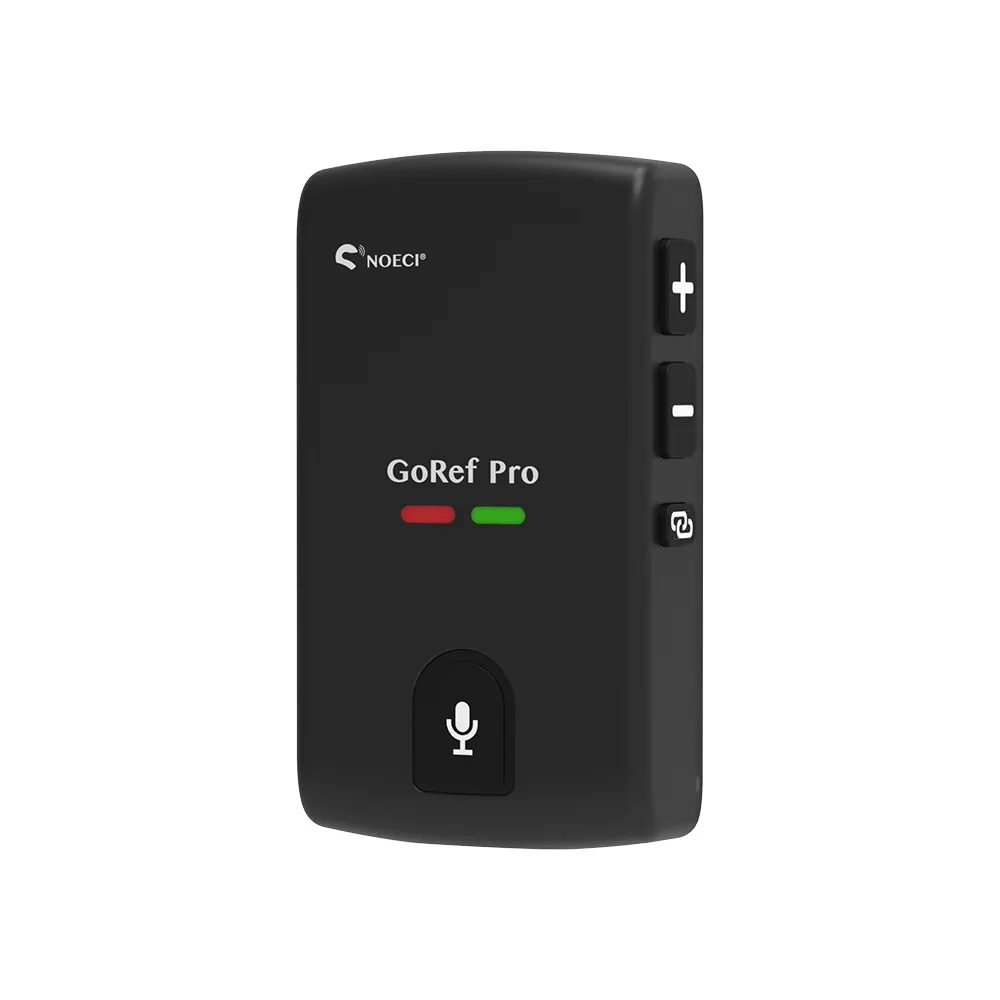
GoRef Pro Referee Headset
Built for referees who need longer range, stable group communication, and advanced features such as one-button audio recording and one-button mic mute.
- Bluetooth 5.4 for fast and stable wireless pairing
- One-button audio record with 512MB memory chip
- One-button mic mute for quick control during matches
- Clear and stable audio with noise reduction
- Up to 1500 meters communication distance
- Supports up to 6 users full-duplex group communication
Frequently Asked Questions
How many men's soccer leagues are there in the United States?
There is no single number because the United States has professional, collegiate, semi-professional, amateur, regional, and recreational leagues. Nationally, there are several major leagues, while hundreds of local leagues operate across the country.
What is the highest men's soccer league in the U.S.?
Major League Soccer (MLS) is the highest level of professional men's soccer in the United States.
Does the United States have promotion and relegation?
No. Professional soccer in the United States currently operates without automatic promotion and relegation between league divisions.
Is NCAA soccer considered professional?
No. NCAA soccer is a collegiate competition for student-athletes, although it serves as one of the most important pathways to professional soccer.
Can amateur clubs play against MLS teams?
Yes. Qualified amateur clubs can compete against professional teams through the Lamar Hunt U.S. Open Cup.
Which league develops the most future MLS players?
MLS NEXT academies, NCAA Division I programs, MLS NEXT Pro, and USL Championship clubs all contribute significantly to player development.
Can referees work their way up to MLS?
Yes. Many professional referees begin officiating local youth matches before progressing through adult amateur leagues, USL competitions, MLS NEXT Pro, and eventually Major League Soccer.
Why do professional referees use communication systems?
Wireless referee communication systems allow officials to share information instantly, improving teamwork, match management, and decision-making during fast-paced games.
Final Thoughts
The United States has one of the most diverse men's soccer ecosystems in the world. Instead of relying on a traditional promotion and relegation pyramid, American soccer offers multiple pathways through professional leagues, college soccer, pre-professional competitions, and amateur organizations.
For players, the system provides several routes to the professional game. For referees, it offers a clear progression from grassroots matches to professional and even international competitions.
Understanding how these leagues connect makes it easier to appreciate the unique structure of American soccer and the many opportunities available at every level of the game.
Whether you're officiating local amateur matches, college games, or high-level competitions, effective communication is essential for teamwork and match control.
Explore Reffcom's range of professional referee communication systems to find reliable solutions designed for modern match officials.