
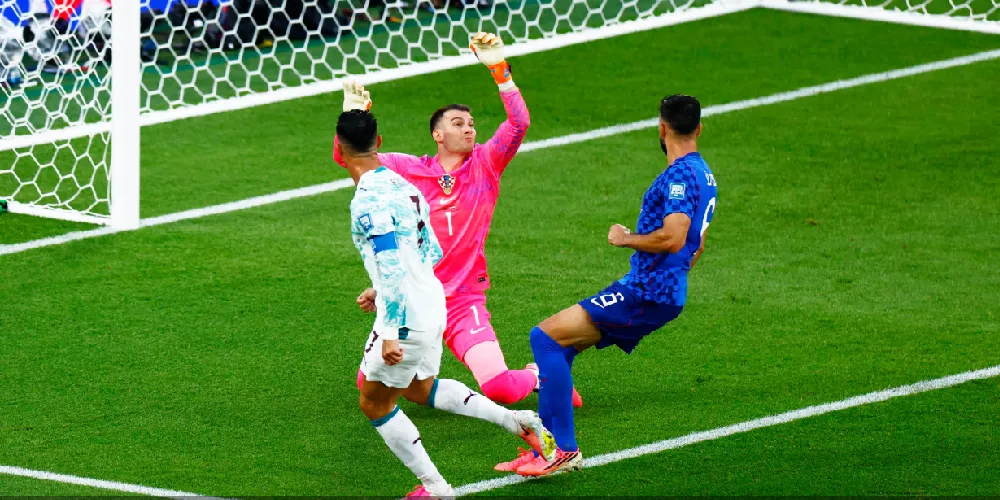

A Dramatic Ending That Sparked Worldwide Debate
One of the biggest talking points of the 2026 FIFA World Cup came during Portugal's dramatic 2–1 victory over Croatia in the Round of 32.
Trailing 2–1 deep into stoppage time, Croatia appeared to have scored a dramatic equalizer that would have forced extra time. Croatian players celebrated, fans erupted inside the stadium, and millions watching around the world believed the match was headed for another 30 minutes.
However, after a Video Assistant Referee (VAR) review, the goal was ruled out for offside.
The decision immediately sparked intense debate across social media. Many Croatian supporters argued that the offside was too close to justify overturning such an important goal, while others defended the decision, pointing out that the Laws of the Game require offside to be judged regardless of the match situation.
Whether fans agreed with the decision or not, the incident highlights an important truth: offside remains one of the most difficult and controversial laws in modern soccer.
The offside rule is one of the most important laws in soccer—and also one of the most misunderstood. Whether you're a new fan, a player, or an aspiring referee, understanding offside is essential for enjoying the game and making accurate decisions on the field.
Although the rule itself is straightforward, applying it during a fast-paced match is incredibly difficult. Even experienced assistant referees occasionally make mistakes because offside decisions often depend on fractions of a second and differences of only a few centimeters.
Quick Summary
- A player can be in an offside position without committing an offense.
- An offside offense only occurs if the player becomes actively involved in play.
- The decision is based on the exact moment the ball is played.
- Assistant referees must judge player positions while tracking the ball at the same time.
- Even with VAR, close offside decisions can still be controversial.
What Is the Offside Rule?
According to Law 11 of the IFAB Laws of the Game, a player is in an offside position if all of the following are true at the moment a teammate plays or touches the ball:
- They are in the opponent's half of the field.
- They are closer to the opponent's goal line than both the ball and the second-last defender.
- They later become actively involved in the play.
Simply standing in an offside position is not an offense. A referee only penalizes a player if they:
- Interfere with play by receiving or playing the ball.
- Interfere with an opponent by blocking vision or challenging for the ball.
- Gain an advantage after the ball rebounds from the goalpost, crossbar, or an opponent.

When Is a Player NOT Offside?
There are several situations where the offside rule does not apply.
No Offside If the Player:
- Is inside their own half of the field.
- Receives the ball directly from a goal kick.
- Receives the ball directly from a throw-in.
- Receives the ball directly from a corner kick.
Why Do Referees Sometimes Get Offside Decisions Wrong?
Many fans assume offside decisions should be easy. In reality, judging offside is one of the hardest responsibilities in soccer officiating.
1. Split-Second Timing
The assistant referee must determine the exact instant the ball is kicked while simultaneously observing every attacking and defending player. Human reaction time alone makes this extremely challenging.
2. Maintaining the Perfect Viewing Angle
Assistant referees constantly run along the touchline to stay level with the second-last defender. Even being one step out of position can change the appearance of an offside decision.
3. High-Speed Player Movement
Modern professional players can sprint over 30 km/h. During a fast counterattack, attackers, defenders, and the ball are all moving simultaneously, making accurate positioning difficult even for elite officials.
4. Active Involvement Is Sometimes Subjective
Not every player standing in an offside position commits an offense. Referees must judge whether that player actually interfered with play or distracted an opponent, which can be open to interpretation.
5. VAR Isn't Perfect
Video Assistant Referee (VAR) has greatly improved accuracy, but it still relies on camera frame rates and technology. Extremely close offside calls measured by millimeters continue to generate debate among players, coaches, and fans.
Tips for Soccer Referees When Judging Offside
- Stay level with the second-last defender.
- Watch the exact moment the ball is played—not when it arrives.
- Judge active involvement before raising the flag.
- Communicate clearly with the center referee.
- Practice positioning and movement during every match.
How Referee Communication Systems Help
Modern referee communication systems allow assistant referees to instantly notify the center referee when they identify a possible offside offense. Instead of relying only on visual signals, officials can communicate verbally in real time.
High-quality referee headsets reduce delays, improve teamwork, and help match officials make more confident decisions during fast attacks—especially in competitive matches where every decision matters.
Looking for Professional Referee Headsets?
Discover the latest referee communication systems from Reffcom, including the NOECI GoRef Pro and GoRef series. Designed for clear, reliable communication during every match.
Frequently Asked Questions
Can a player be offside without touching the ball?
Yes. However, they are only penalized if they become actively involved in the play or interfere with an opponent.
Is there offside from a throw-in?
No. A player cannot be offside when receiving the ball directly from a throw-in.
Does VAR eliminate all offside mistakes?
No. VAR improves accuracy, but extremely close decisions can still be controversial due to camera frame rates and interpretation.
Why is offside so difficult to judge?
Officials must monitor multiple moving players while identifying the exact instant the ball is played, making offside one of the most challenging decisions in soccer.
Final Thoughts
The offside rule exists to keep soccer fair, but enforcing it is far more challenging than many people realize. Assistant referees must combine excellent positioning, concentration, teamwork, and communication to make accurate decisions under intense pressure.
As technology continues to evolve, referee communication systems and VAR will help improve decision-making—but the judgment and experience of match officials will always remain the most important factor.
The Croatia vs Portugal Controversy: Was VAR Correct?
The dramatic ending of Portugal's 2–1 victory over Croatia immediately divided soccer fans around the world. Many Croatian supporters believed the late equalizer should have counted, arguing that the Portuguese defender intentionally allowed the ball to pass and therefore reset the offside phase.
However, the technology used at the 2026 FIFA World Cup tells a different story.
The tournament's Semi-Automated Offside Technology (SAOT) combines high-speed tracking cameras with a sensor inside the official match ball to identify the exact instant the ball is touched. According to the VAR review, the Croatian attacker who eventually scored was already in an offside position when a teammate made the decisive touch before the ball reached him.
That earlier touch was critical. Once it was detected, the attacking phase was judged from that moment—not from the later contact that many viewers focused on during television replays.
Some fans may disagree with how strictly the offside law is applied, especially when the margin is extremely small. However, under the current IFAB Laws of the Game and the technology available to VAR, the decision appears to be consistent with today's interpretation of the offside rule.
This incident also illustrates an important point: many controversial offside decisions are not caused by incorrect officiating, but by the difficulty of identifying the exact moment an attacking touch occurs. Without modern technology, that decisive touch would have been almost impossible to detect in real time.
