
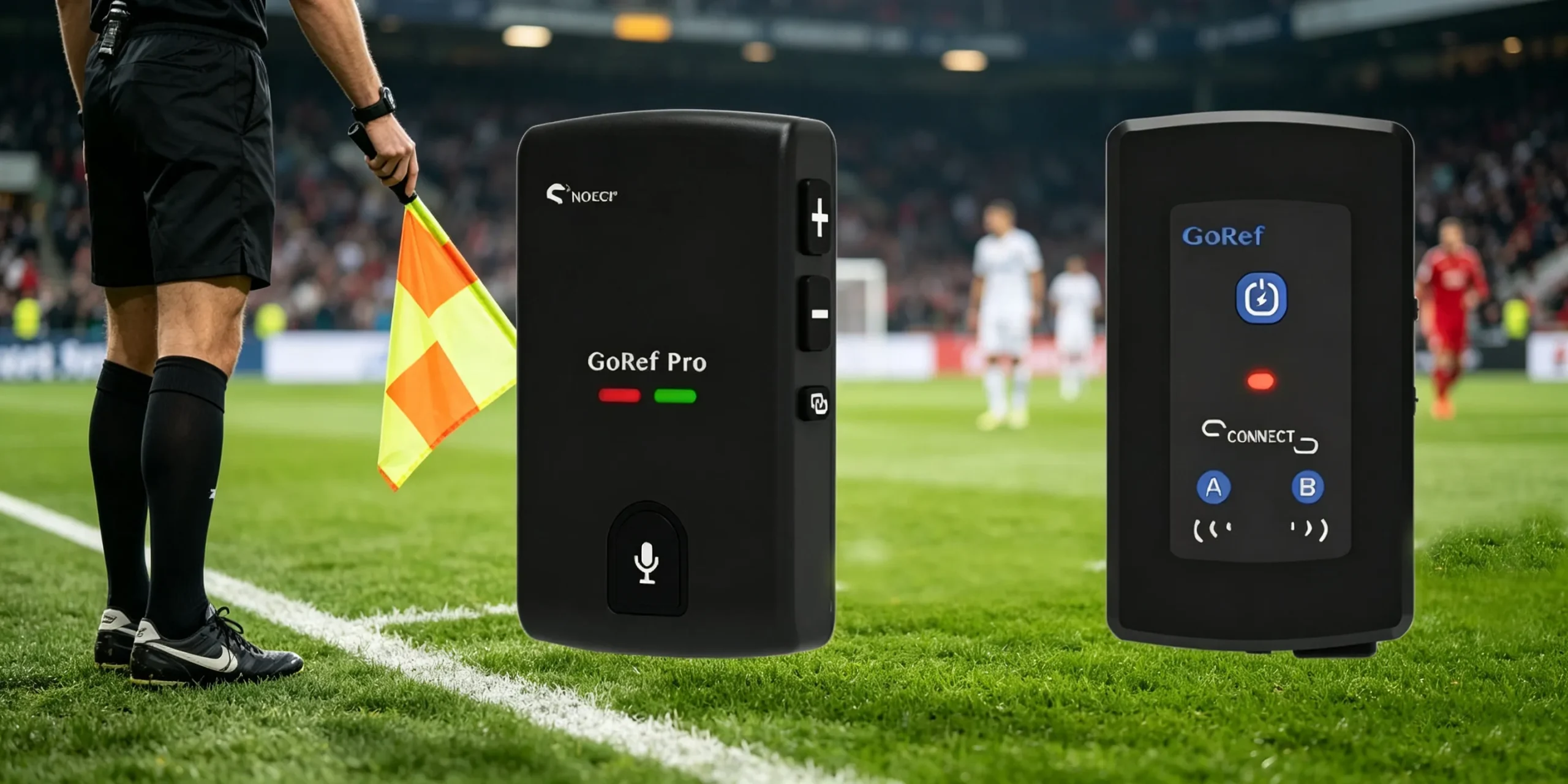

Communication is an essential part of soccer officiating. During a match, the referee needs to communicate with assistant referees, the fourth official, and, at higher levels, the VAR team.
At the same time, the referee must communicate with players and coaches from both teams and occasionally deal with communication from spectators.
Because a soccer field is large and the action can move quickly, referees cannot rely on just one method of communication. They use a combination of verbal communication, body language, official signals, assistant referee flags, and referee communication headsets.
Verbal Communication
Direct communication with players, coaches, and other officials.
Visual Communication
Body language, hand signals, eye contact, whistles, and flags.
Electronic Communication
Referee headsets and intercom systems for communication between officials.
1. Face-to-Face Verbal Communication
In a regular soccer match, verbal communication is one of the most important tools available to a referee.
The referee frequently needs to speak directly to players and coaches to explain decisions, manage the match, prevent unnecessary conflicts, and give instructions.
Good referee communication should be:
- Clear
- Short
- Calm
- Confident
- Appropriate for the situation
The goal is not to have a conversation with every player. The goal is to communicate enough information to manage the match effectively.
Simple and Clear Language
A referee does not need to give a long explanation every time a player asks about a decision. In many situations, a short and clear explanation is enough.
Language and Communication
At the local level, referees will normally communicate in the language commonly used by the players, coaches, and officials.
At international competitions, communication can become more complicated because officials and players may come from different countries. International referees therefore need to be able to communicate effectively using the languages and communication standards required by their competition.
English is widely used in international soccer, although the specific language requirements depend on the competition and officiating organization.
Referee Communication Attitude
How a referee communicates can be just as important as what the referee says.
A good referee should be approachable and respectful, but should also maintain authority and control of the match.
Being friendly does not mean allowing players or coaches to challenge every decision.
On the other hand, a referee should avoid being unnecessarily aggressive, sarcastic, or condescending.
Calm + Confident + Respectful + Firm
The referee should also adapt communication to the situation.
A calm explanation may be appropriate when a player simply asks why a foul was called. A stronger and more direct response may be necessary when a player repeatedly argues with the referee or deliberately delays a restart.
Effective communication helps the referee establish control without creating unnecessary conflict.
2. Body Language and Referee Signals
A soccer field can be more than 100 yards long, and the referee cannot always communicate verbally with everyone involved in the match.
This is why body language and official referee signals are essential.
Referees use their hands, arms, posture, movement, and whistle to communicate decisions that need to be understood by players, coaches, assistant referees, and spectators.
Common Referee Signals
Assistant Referee Flag Signals
Assistant referees also use their flags to communicate important information to the referee.
The referee and assistant referees must understand these signals so they can communicate effectively without necessarily speaking to each other.
Why Are Signals Important?
Imagine that the referee is 40 or 50 yards away from an assistant referee when an incident occurs.
Even if the assistant referee shouts, the referee may not hear the message clearly because of distance, crowd noise, players shouting, and the speed of the match.
This is why referee signals remain an important part of soccer officiating even when modern communication technology is available.
3. Referee Headset and Intercom Communication
Verbal communication and signals work well, but they have limitations.
The referee may be running on one side of the field while an assistant referee is positioned on the opposite side. The fourth official may be standing near the touchline, and at higher-level competitions, the VAR team may be located in a separate video operation area.
In these situations, a referee communication system can make communication much faster and more efficient.
A referee headset allows officials to communicate by voice without relying only on shouting, flags, or visual signals.
How Does a Referee Headset Work?
A typical referee communication system consists of several communication units or headsets used by members of the referee team.
Depending on the system and competition, the users may include:
Center Referee
Leads the officiating team and makes the final decisions during the match.
Assistant Referees
Monitor play from the touchlines and provide information to the referee.
Fourth Official
Supports the referee team with match administration and technical-area management.
VAR Team
At competitions using VAR, the video officials communicate with the referee through the official communication system.
How Do Referees Communicate About Offside?
Offside is a good example of why communication between officials is important.
Assistant referees are responsible for monitoring the offside line while following play.
When an offside offense occurs, the assistant referee can raise the flag to alert the referee.
When a referee communication system is being used, the assistant referee can also communicate verbally with the referee.
The referee can then make the final decision and restart the game appropriately.
How Do Referees Communicate About Fouls?
Assistant referees often have a different viewing angle from the center referee.
There may be situations where an assistant referee has a much clearer view of a foul than the center referee.
For example, a challenge may occur close to the touchline while the center referee is several yards away and has another player blocking the view.
The assistant referee can communicate what they saw. This can help the referee make a more informed decision.
However, communication does not mean that every decision is automatically transferred to another official. The referee remains responsible for making decisions according to the Laws of the Game and the competition's officiating procedures.
Communication With the Fourth Official
The fourth official is another important member of the referee team.
The fourth official is normally positioned near the technical areas and can observe events that may be difficult for the referee to see from the field.
A referee communication system allows the fourth official to provide information to the referee quickly without needing to wait for a stoppage in play.
Communication With VAR
At professional competitions where Video Assistant Referee technology is being used, communication between the referee team and VAR team becomes even more important.
The VAR team reviews relevant match incidents using video footage and communicates with the referee through the official communication system.
Depending on the situation and competition protocol, VAR may review incidents involving areas such as:
This demonstrates how referee communication has developed from simple face-to-face conversations and hand signals into sophisticated communication networks involving officials who may be located far away from the field.
Why Do Soccer Referees Need Communication Headsets?
The biggest advantage of a referee communication headset is speed and clarity.
Without a communication system, an assistant referee may need to raise a flag and wait for the referee to see the signal before explaining the situation.
With a communication system, the assistant referee can communicate information immediately.
Faster Communication
Officials can communicate important information immediately instead of waiting for visual contact.
Clearer Information
Voice communication allows officials to provide more information than a simple hand or flag signal.
Better Teamwork
The referee team can stay connected and coordinate during fast-moving situations.
Useful Over Distance
Officials can communicate even when they are positioned far apart on the field.
A communication system does not replace official signals. Instead, it works together with them.
Voice Communication + Visual Signals + Good Positioning = Better Officiating Communication
What Makes a Good Referee Communication System?
Not every communication headset is designed specifically for sports officiating. A good referee communication system should provide several important features.
Officials need to hear each other clearly even when players, spectators, and other environmental noise are present.
The system should maintain a stable connection throughout the match.
Referees need to keep their hands available for signals, cards, whistle, and other equipment.
A referee may wear the communication system for an entire match, so comfort is important.
The system should provide enough operating time for the match and ideally additional battery capacity.
Referees should be able to start communicating quickly without complicated controls.
The microphone should pick up the referee's voice clearly without excessive background noise.
Do Referees Always Need a Headset?
No. A referee communication system is not required for every soccer match.
At local youth and grassroots matches, referees commonly rely on:
Communication headsets become more useful as the level and speed of competition increase.
Professional and high-level matches may use sophisticated communication systems because the referee team needs to exchange information quickly and efficiently.
For grassroots referees, a referee communication system can also be useful when the competition, referee organization, or referee crew chooses to use one.
The Three Main Types of Referee Communication
Verbal
Used when the referee speaks directly with players, coaches, or other officials.
Visual
Includes body language, hand signals, eye contact, whistle signals, and assistant referee flags.
Electronic
Uses referee headsets or intercom systems to communicate between members of the officiating team.
These three methods complement each other.
A good referee does not depend on only one form of communication. Instead, the referee uses the most appropriate method for each situation.
Why Is Communication Important for Good Officiating?
Good communication can help referees:
Frequently Asked Questions
How do soccer referees communicate with each other?
Soccer referees communicate through a combination of verbal communication, hand and body signals, assistant referee flags, eye contact, and referee communication headsets.
Do soccer referees use headsets?
Referee headsets are commonly used in many higher-level competitions. Whether they are used in grassroots or local matches depends on the competition and referee organization.
How does an assistant referee communicate with the referee?
Assistant referees can use flag signals and, when available, a referee communication system. This allows them to communicate important information such as offside, fouls, and other incidents.
How do referees communicate with VAR?
In competitions using VAR, the VAR team communicates with the referee through the official communication system according to the competition's VAR protocol.
What is a referee communication system?
A referee communication system is a wireless communication system that allows members of a referee team to communicate with each other during a match using microphones and headsets.
Can grassroots referees use communication headsets?
Yes. Although communication headsets are not necessary for every grassroots match, they can be useful for referee crews that want faster and clearer communication between officials.
Final Thoughts
So, how does the referee communicate in a soccer match?
The answer is through a combination of verbal communication, body language, official signals, assistant referee flags, and electronic referee communication systems.
At the grassroots level, most referees rely heavily on their whistle, signals, positioning, and direct communication.
As the level of competition increases, communication between the referee, assistant referees, fourth official, and VAR becomes increasingly important.
Referee headsets and intercom systems allow officials to exchange information quickly without relying entirely on shouting or visual signals.
The best communication system is not necessarily the most complicated one. It should be clear, reliable, comfortable, easy to use, and suitable for the level of competition.
Looking for a Referee Communication System?
Clear communication can make it easier for referee crews to coordinate during a match. Explore referee communication systems designed for soccer officials and sports officiating.
Explore Referee Communication Systems →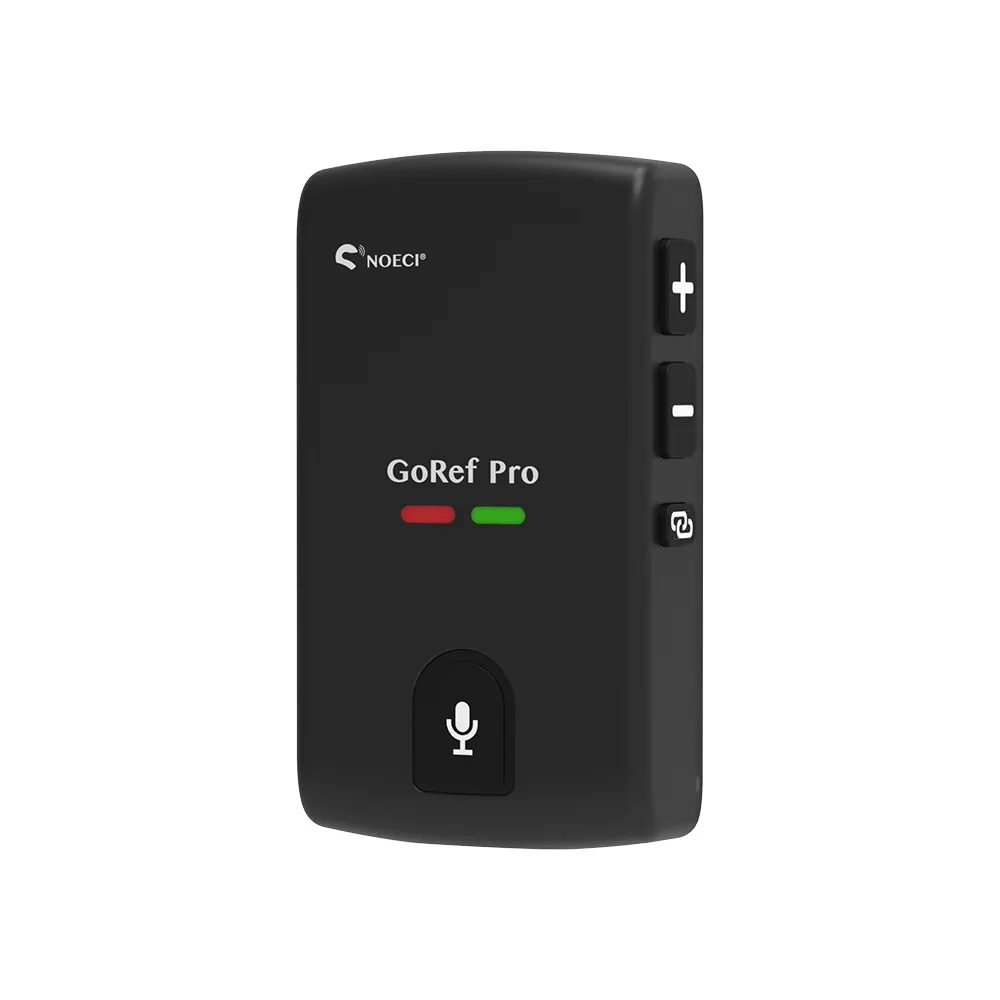
GoRef Pro Referee Headset
Built for referees who need longer range, stable group communication, and advanced features such as one-button audio recording and one-button mic mute.
- Bluetooth 5.4 for fast and stable wireless pairing
- One-button audio record with 512MB memory chip
- One-button mic mute for quick control during matches
- Clear and stable audio with noise reduction
- Up to 1500 meters communication distance
- Supports up to 6 users full-duplex group communication
